
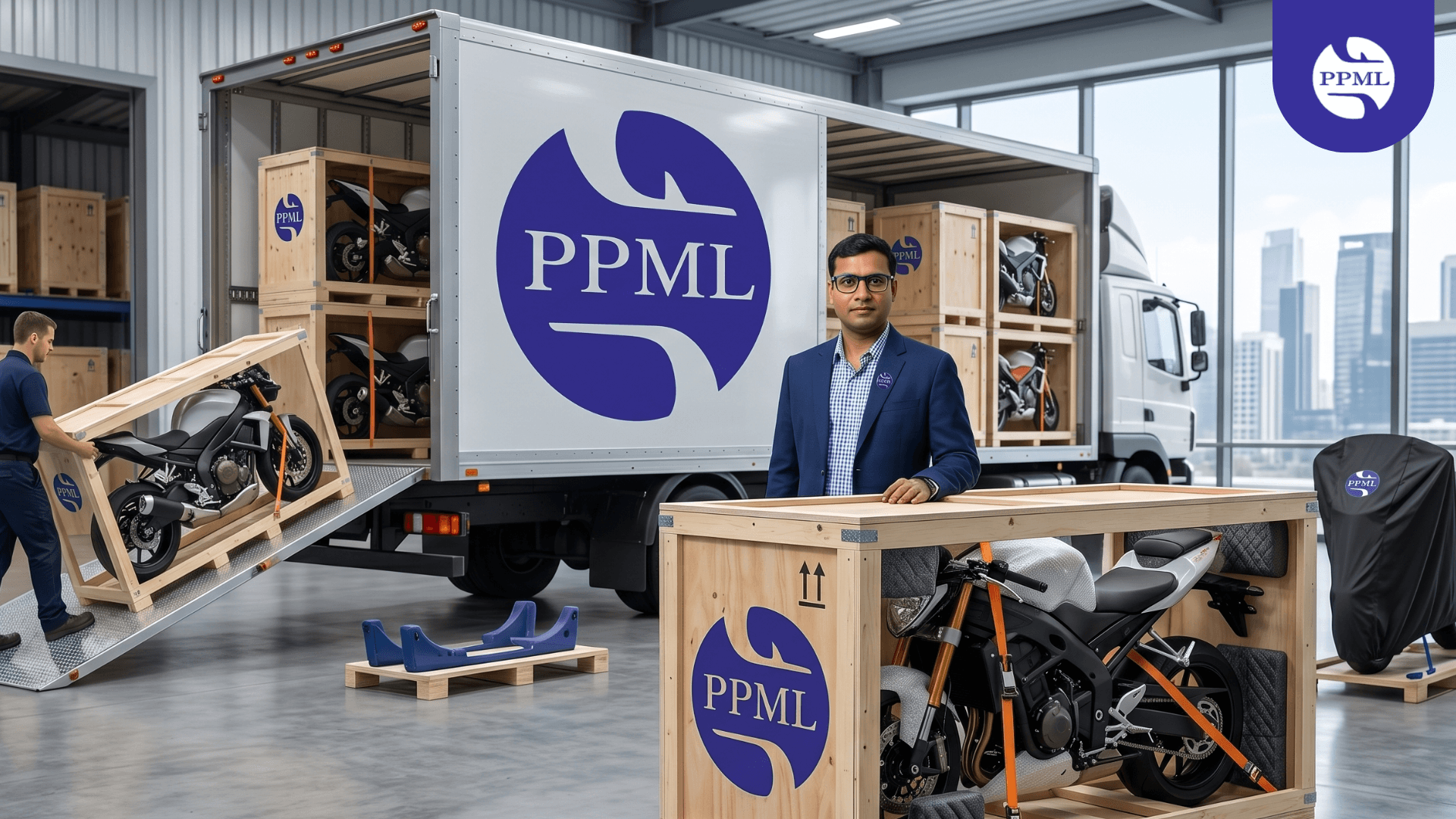
There’s a very specific kind of anxiety that comes with moving your bike to another city.
Not the loud kind – the quiet one. The kind where you keep thinking, “Kothao jeno scratch na hoy”
Because let’s be honest – shifting furniture is one thing. If your chair gets a dent, life goes on. But a bike? That hits differently.
And the funny part is, most people only realise how complicated bike transport is after they’ve already booked someone.
Table of Contents
ToggleIt Usually Starts With Wrong Assumption
Most people think bike shifting is just : “Pickup hoga → truck mein jayega → delivery ho jayega.”
Simple.
But what actually happens in between matters more than the distance itself.
Your bike is :
- Lifted (sometimes not very gently)
- Tied inside a carrier
- Travelling for hours or days
- Unloaded in a completely different environment
That entire journey decides whether you get your bike back clean… or with “unexpected character marks.”
Planning Late Is Where Problems Begin
Almost everyone delays this step.
You’ll plan your house move, your tickets, your work schedule… and then suddenly realise – “Bike ta ki kora jay?”
That’s when you rush.
And rushing is expensive.
- Fewer transporter options
- Higher prices
- Zero time to verify anything
If you plan even 5–7 days earlier, the entire experience changes. You get choices. You get time to ask questions. You don’t panic-book.
Documentation Feels Annoying… Until It Saves You
This part is boring. No one enjoys it.
But if anything goes wrong, this is the only part that protects you.
Keep these ready (don’t depend fully on the transporter) :
- RC copy
- Insurance (valid)
- PUC
- ID proof
- NOC (if required)
Most issues during delivery delays or checks happen because something was “assumed” and not confirmed.
The Small Things People Ignore
This is where real damage usually starts.
Before handing over your bike :
- Remove that extra mirror you added
- Take off mobile holders
- Remove carriers or saddle bags
- Don’t leave documents inside
Nobody tells you this properly, but loose parts don’t survive long-distance handling well.
Even if they don’t break, they get scratched, bent, or lost.
Fuel and Tyres – Sounds Minor, Isn’t
But it matters more than you think.
Keep fuel around quarter tank.
Not full. Not empty.
And tyre pressure? Normal. Not tight like you’re going on a highway ride.
Why?
Because your bike is not being ridden – it’s being handled, lifted, and placed. Overpressure or extra weight just makes that process riskier.
One Thing You Must Do (Most People Skip This)
Take photos.
Not casual photos. Proper ones.
- Both sides
- Close-ups of existing scratches
- Front, back, panels
Because the moment your bike leaves your building, your control is gone.
If something happens, these photos are your only backup. Without them, it becomes your word vs theirs.
Insurance – The Step Everyone Tries to Skip
People hesitate here.
“Extra taka khorcha…” “Naa holeo hobe…”
Until something actually happens.
And then there’s nothing you can do.
Transport companies are not magicians. Roads are unpredictable. Handling involves humans. Mistakes happen.
Insurance isn’t about expecting damage. It’s about not being stuck if it happens.
Communication Matters More Than You Think
One mistake people make is assuming everything is understood.
It’s not.
If you have :
- Specific pickup timing
- Delivery urgency
- Location details
- Any special instruction
Write it down. Share it clearly.
Because verbal instructions disappear very fast in moving chaos.
The Truth About “Cheap Quotes”
If one transporter is significantly cheaper than everyone else, pause.
Not saying it’s always wrong. But ask why.
- Are they skipping packing quality?
- No insurance included?
- Shared transport with delays?
Low cost often shows up later as :
- Delay
- Rough handling
- Extra charges at delivery
And by then, you don’t have much control.
What Actually Goes Wrong in Real Moves
Not big disasters. Small things.
- A loose part gets damaged
- Delivery gets delayed by days
- Bike arrives dusty or scratched
- No one picks calls during transit
- Confusion at delivery point
None of this feels huge individually. But together, it ruins the experience.
So What Actually Makes a Move “Safe”?
Not just hiring a transporter.
It’s this combination :
- You planned early
- You removed vulnerable parts
- You documented your bike properly
- You didn’t skip insurance
- You communicated clearly
When these basics are done right, the move becomes predictable.
Final Thought
Bike transport is one of those things people underestimate.
Until they do it once.
After that, nobody repeats the same mistakes.
Because it’s not just about sending a vehicle from one city to another. It’s about getting it back in the same condition – without stress, without arguments, without regret.
Do it once properly, and you’ll never worry about it again.
PEOPLE ALSO ASK
The safest way is to hire a professional bike transport service like Pradhan Packers and Movers Pvt Ltd that offers proper packing, secure loading, and transit insurance.
Keep around a quarter tank of fuel to reduce weight and avoid leakage risks.
It’s not mandatory, but highly recommended to cover any unexpected damage during transit.
Yes, removing loose parts like mirrors and carriers helps prevent damage or loss.
It depends on distance, but typically ranges from a few days to a couple of weeks.
Many transport companies offer GPS tracking so you can monitor your bike in real time.





Leave a Reply