

There’s a strange pattern most people notice only after they move houses in India.
The quote looks manageable in the beginning. Maybe ₹18,000 for a local move. ₹42,000 for an intercity shift.
The sales executive sounds polite, promises “all inclusive service,” and keeps repeating phrases like no tension sir or complete packing included.
Then moving day arrives, the truck gets loaded, and suddenly new words begin appearing.
“Stair charge” “Extra labor” “GST separate” “Long carry” “Packing material cost” “Union fee”
And by the time your sofa reaches the new flat, the final bill looks nothing like the original quotation.
This is where most families feel trapped. Because once your household goods are already inside the truck, negotiating becomes emotionally exhausting. People simply pay to avoid confrontation and finish the relocation.
The truth is, hidden charges in household shifting usually happen for two reasons. Sometimes the moving company intentionally underquotes to win the booking.
Other times, customers themselves don’t understand how relocation pricing actually works in India.
A long-distance or even city-level move is not a simple taxi service. It’s a layered logistics operation involving labor, fuel, truck access, road permits, packing materials, apartment restrictions, and transit risk.
The problem begins when these costs are vaguely explained or intentionally buried inside “terms and conditions.”
That’s why experienced relocation companies spend far more time on survey and inspection than on discounts.
Because the cheapest quote is almost never the cheapest final move.
Table of Contents
ToggleWhy Low Quotes Usually Become Expensive Moves
One of the biggest mistakes people make is comparing movers purely on the final number shown on WhatsApp.
If three companies quote around ₹35,000 and one company suddenly says ₹18,000, most customers instinctively feel they found a bargain. In reality, this is often where the problem starts.
Many unorganized movers intentionally keep the first quote unrealistically low because they know Indian customers negotiate aggressively. Their strategy is simple: secure the booking first, recover profits later through hidden additions.
Sometimes the hidden costs appear before loading. Sometimes midway during transit. Sometimes after the truck reaches destination.
The most common line sounds like this : “Sir actual material volume increased.”
Or : “Truck cannot enter lane.”
Or : “Labor waiting charge applicable.”
At that point, customers are already emotionally committed to the move.
This is why professional movers insist on detailed physical surveys or proper video inspections. Accurate surveys reduce surprise charges later.
Ironically, the companies asking the most questions upfront are usually the safer option.
The Difference Between Binding and Non-Binding Quotes
Most customers in India never ask what type of estimate they are receiving.
That single mistake creates enormous billing confusion later.
A non-binding estimate is basically a rough approximation. The mover reserves the right to revise pricing depending on actual load volume, labor time, packing material usage, or truck size requirement.
This type of quotation is extremely common in India, especially among local packers and movers operating through aggregator portals.
A binding estimate, however, locks the pricing based on the surveyed inventory. Unless the customer adds extra items later, the company cannot arbitrarily increase costs.
Then there’s the safest version: a binding not-to-exceed estimate.
This means the customer may pay less if the shipment volume reduces, but never more than the agreed amount.
Very few customers ask for this in writing. And that’s exactly why disputes happen.
Stair Charges, Elevator Fees, and “Long Carry” Costs
This is probably the most misunderstood category of hidden relocation expenses.
Most moving quotations assume the truck can park reasonably close to the building entrance and that loading access is straightforward.
But Indian cities rarely work that smoothly.
In places like Kolkata, Bangalore, Mumbai, Hyderabad, or Delhi NCR, truck access becomes complicated very quickly. Narrow lanes, apartment restrictions, market congestion, overhead wires, basement loading zones, and parking limitations change the actual labor effort dramatically.
If movers must carry furniture manually for long distances from truck to building entrance, a long carry fee gets added.
Similarly, staircase charges apply when heavy furniture must be manually moved across multiple floors.
Customers often argue : “But I already told you it’s a third-floor flat.”
The issue is, many customers mention it casually during calls, but the detail never reaches the operations team properly. That communication gap later becomes a billing conflict.
Elevator fees also surprise many families.
In older apartments with small lifts, movers lose significant time waiting for repeated trips. Some buildings even restrict service elevator timings, especially in premium societies.
Good relocation companies usually ask these questions during survey itself :
How far can the truck enter?
Is there dedicated parking?
Is there a service elevator?
How many floors?
Are there society movement restrictions?
Are loading permissions required?
If nobody asks these questions before booking, hidden charges later become very likely.
Packing Material Charges Are Often Underestimated
People love selecting “self-packing” options to reduce moving cost.
But here’s what usually happens.
The family packs around 60% of the house. Then exhaustion starts. Kitchen items remain loose. Glassware is unfinished. Wires are tangled. Wardrobes stay half-open. Random items sit everywhere.
When movers arrive, they cannot wait three extra hours.
So they step in and start packing themselves.
That immediately converts a partial DIY move into a professional packing move – with labor and material costs added accordingly.
Another issue is poor packing quality.
Cheap cartons from grocery stores collapse easily during interstate shifting. Thin tape opens under heat. Newspaper ink stains utensils and decor items. Weak bubble wrap fails under highway vibration.
Then customers blame movers for breakage.
Professional-grade relocation materials are expensive for a reason. Good corrugated boxes, foam sheets, stretch wrapping, waterproof lamination, and edge protection significantly reduce transit damage across long Indian routes.
This is especially important during monsoon relocations.
The “GST Separate” Shock
This remains one of the most frustrating surprises during Indian household shifting.
A customer receives a quotation saying ₹28,000. They mentally lock the budget. Then during payment, the mover says : “GST extra, sir”
Suddenly the final invoice becomes ₹33,040.
Many customers assume GST is automatically included. Many movers intentionally avoid clarifying it upfront because lower-looking quotes attract more bookings.
Always ask one direct question before confirming any relocation service : “Is this final amount inclusive of GST and all taxes?”
If the answer is vague, ask for revised written quotation immediately.
Never rely on verbal assurance.
Shared Truck Confusion Creates Extra Charges
Part-load or shared truck shifting is common for intercity moves in India.
Instead of booking an entire truck exclusively, multiple households share container space. This reduces transportation cost significantly.
But shared transportation introduces operational complications.
If your goods are delayed because another customer’s unloading schedule changed, some movers impose warehousing or holding charges unexpectedly.
Sometimes customers themselves create confusion by adding extra luggage after loading.
A few additional cartons may seem harmless to the customer, but inside shared logistics planning, even small additions affect space calculations and routing.
Professional movers usually create inventory lists precisely to avoid these disputes.
If your inventory changes after quotation, inform the mover before loading day.
Not during loading.
Definitely not after the truck arrives.
Insurance Misunderstandings Cause Major Financial Losses
One of the most dangerous assumptions people make is believing their goods are “fully insured” automatically.
Most are not.
Basic transporter liability coverage in India is extremely limited. In many cases, compensation gets calculated based on weight, not actual market value.
Which means if an expensive television breaks, payout may be absurdly low compared to replacement cost.
Some movers also collect “insurance charges” internally without issuing actual insurance documents from IRDAI-approved providers.
That’s a serious red flag.
Real transit insurance always includes :
Insurance company name
Policy number
Declared inventory value
Coverage terms
Transit route details
If the mover cannot provide genuine policy documentation, the “insurance” may simply be internal assurance with no legal backing.
For expensive electronics, antiques, artwork, or premium furniture, proper insurance matters far more than minor quotation discounts.
Last-Minute Delays Become Expensive Very Quickly
Interstate relocation operates on scheduling precision.
Truck routes, loading teams, highway permits, fuel planning, and unloading slots are interconnected. When customers suddenly postpone shifting after booking confirmation, movers often incur operational losses immediately.
That’s why cancellation or rescheduling charges exist.
Similarly, delays at destination create another hidden expense category : storage-in-transit.
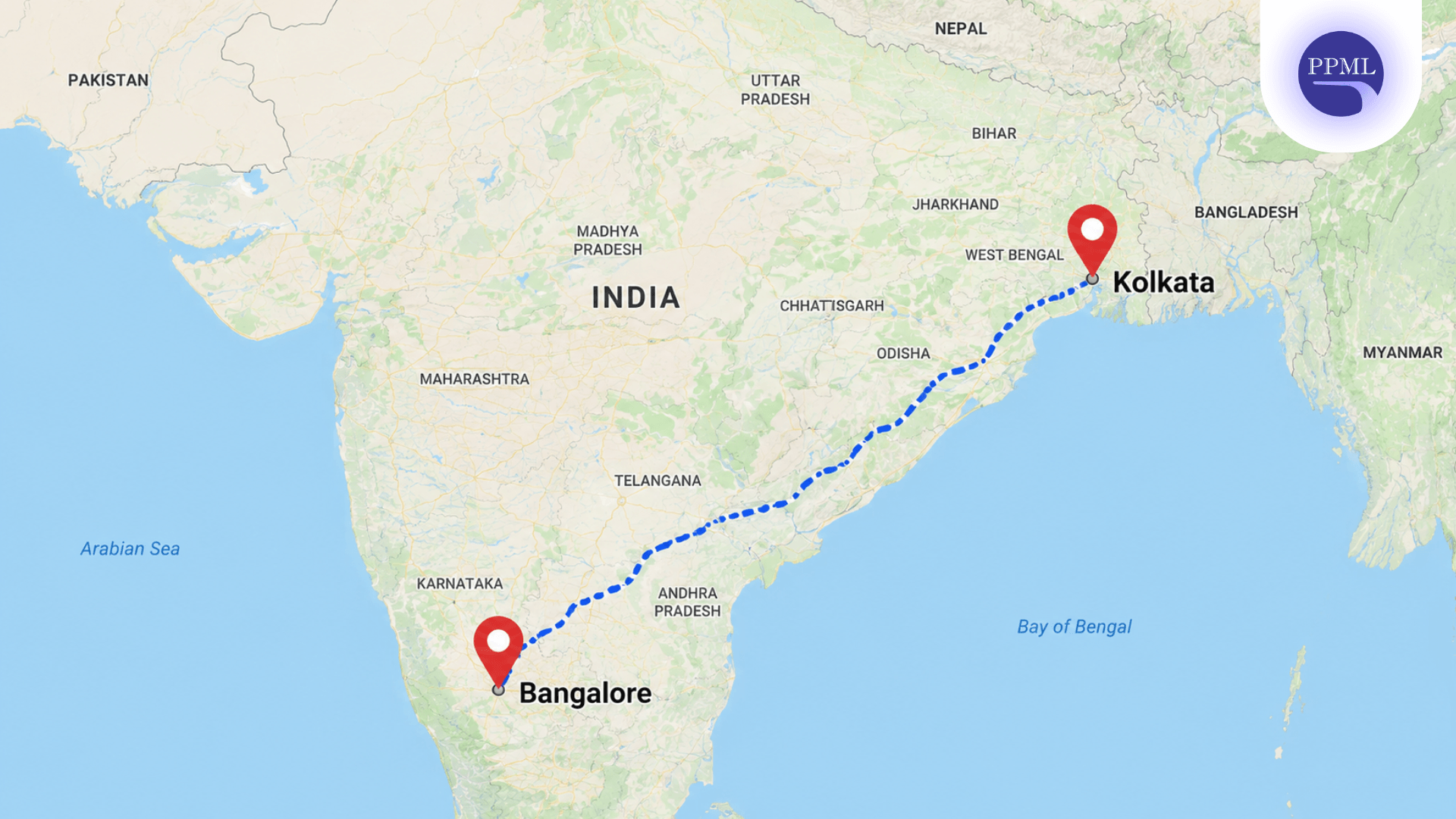
Imagine your goods reach Bangalore from Kolkata, but your flat possession gets delayed three days.
The truck cannot remain parked indefinitely.
So the goods move temporarily into warehouse storage.
Now additional charges apply for :
Unloading into storage
Temporary warehousing
Reloading again
Secondary delivery trip
Customers rarely think about these possibilities while budgeting.
Experienced planners always keep buffer funds for unexpected timing shifts.
The Biggest Red Flag: No Physical Survey
This single point eliminates half the hidden charge problems in the industry.
If a mover gives you a final interstate quotation within two minutes on WhatsApp without seeing inventory properly, be cautious.
Professional relocation pricing depends on :
Volume
Access conditions
Fragile items
Truck size
Labor intensity
Distance
Packing requirement
Seasonal demand
Nobody can calculate that accurately from “2BHK shifting sir”
A proper survey protects both sides.
It helps movers estimate correctly.
And it helps customers avoid surprise billing later.
Practical Ways to Avoid Hidden Charges Completely
People often ask whether hidden charges can be eliminated entirely.
In reality, yes – most of them can.
But only if preparation happens before moving day.
The smartest customers usually follow a few simple habits :
They declutter before survey instead of after quotation.
They disclose difficult access conditions honestly.
They finish packing before movers arrive.
They ask whether GST is included.
They request written inventory confirmation.
They insist on detailed quotations rather than vague package pricing.
Most importantly, they avoid choosing movers purely based on the cheapest number.
Because in household relocation, the lowest quotation often becomes the most expensive experience emotionally.
Final Thoughts
A good relocation experience rarely depends on luck.
It depends on clarity.
Clear inventory. Clear pricing. Clear communication. Clear paperwork.
That’s what separates organized moving from chaotic moving.
The reality is, professional household shifting in India has become far more structured over the last decade. But the industry still contains thousands of small operators competing aggressively through lowball pricing tactics.
And unfortunately, customers usually realize the real cost only after the truck doors close.
The safest approach is simple : slow down the booking process
Ask uncomfortable questions.
Read every line carefully.
Demand transparency before advance payment.
Because once the relocation begins, your bargaining power reduces dramatically.
And by then, avoiding hidden charges becomes much harder than preventing them in the first place.
PEOPLE ALSO ASK
The most common hidden charges during household shifting usually appear after the loading process starts. These include stair carrying fees, long-distance carrying charges, packing material costs, GST additions, storage fees, shuttle vehicle charges for narrow lanes, and extra labor charges for bulky furniture or appliances. Many customers only focus on the base quote and ignore operational details mentioned in the fine print. That is where relocation bills suddenly increase on moving day.
The safest way to avoid hidden relocation costs is to request a detailed written quotation after a proper home inspection. Avoid verbal estimates over phone calls. Ask the company to clearly mention GST, labor charges, packing costs, tolls, insurance, and unloading fees in writing. It is also important to disclose everything honestly – including stairs, elevators, narrow lanes, or heavy furniture – because undisclosed conditions often become surprise charges later.
A binding estimate is a fixed-price quotation provided by the moving company based on the surveyed inventory list. Once finalized, the mover cannot increase the price unless additional items or services are added later by the customer. Compared to non-binding estimates, binding quotations offer far better financial clarity during long-distance shifting.
Staircases and elevators increase labor time, physical effort, and loading complexity. Carrying heavy furniture through multiple floors without direct truck access slows the moving process significantly. Some apartment buildings also have small elevators or restricted freight timings, which extends loading duration. Because labor costs increase, movers often apply stair or elevator handling charges.
Not always. Many low-cost moving quotations exclude packing materials initially to make the estimate appear cheaper. On moving day, companies may charge separately for carton boxes, bubble wrap, foam sheets, corrugated rolls, stretch film, and wooden crating. Always confirm whether professional packing materials are included in the final quotation before booking.
A shuttle charge applies when large moving trucks cannot directly access the property due to narrow roads, low-height entry points, congestion, or apartment restrictions. In such cases, movers transfer household items into smaller vehicles for final pickup or delivery. Since this requires additional labor and transportation, companies add a separate shuttle fee.








Leave a Reply