
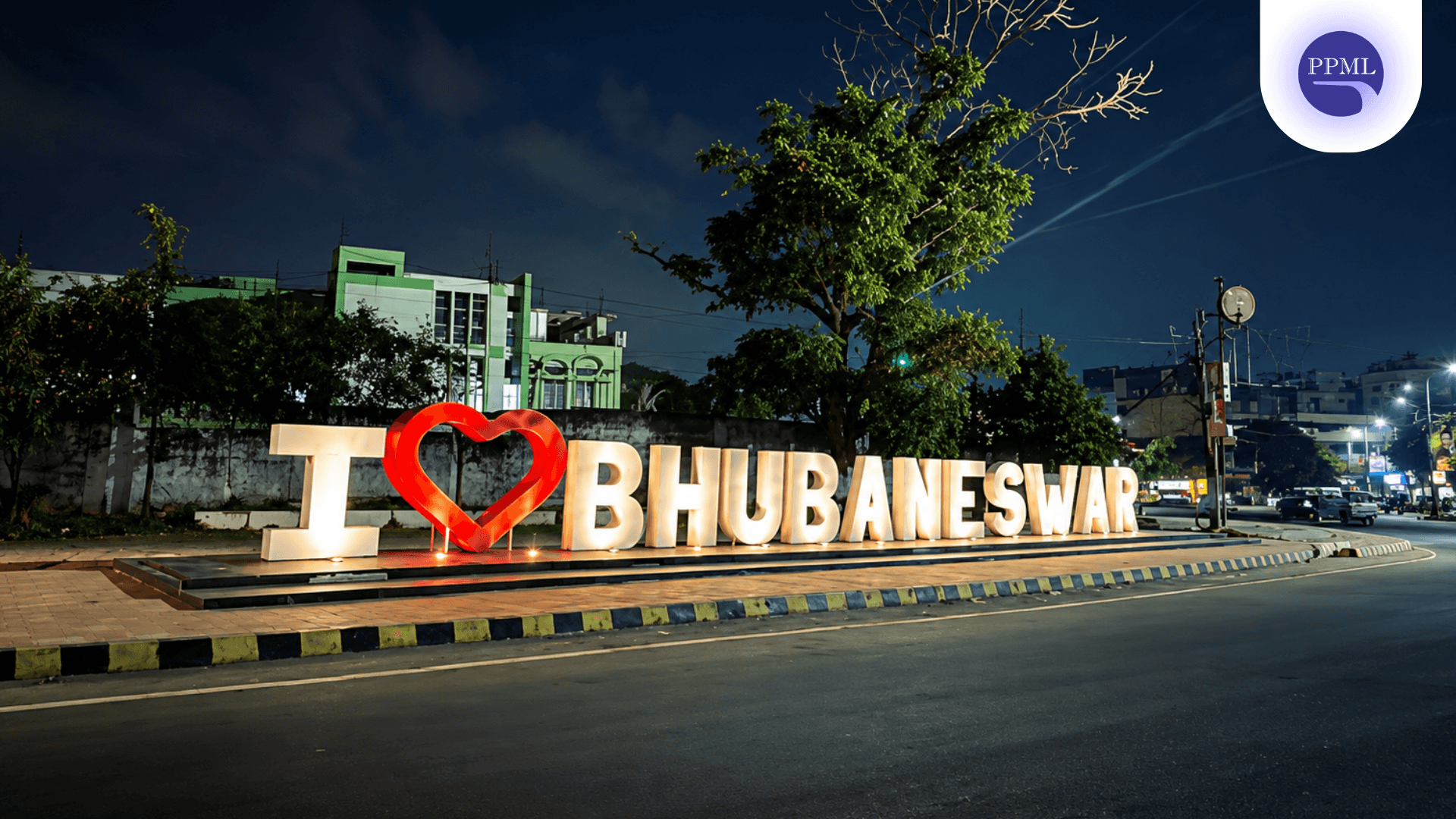
Kolkata and Bhubaneswar share more than most people expect – a love of fish, a soft spot for sweets, a genuine appreciation for a good adda or its Odia equivalent.
But spend a week in each city and the difference becomes obvious fast. Kolkata runs on a certain chaotic, romantic energy that’s been building for centuries. Bhubaneswar runs calmer, more structured, more deliberately planned.
We’ve handled enough moves along this particular route to know it’s one of the gentler interstate transitions in the country – close enough that you’re not starting from scratch culturally, different enough that it genuinely feels like a new chapter.
Here’s what actually matters if you’re making this move.
Table of Contents
ToggleTwo Cities, Two Very Different Rhythms
| Feature | Kolkata | Bhubaneswar |
|---|---|---|
| Pace of life | Fast, crowded, historically dense | Calm, structured, peaceful |
| Urban layout | Organic, narrow lanes | Planned sectors, wide roads |
| Cost of living | Moderate to high | Low to moderate |
| Climate | Humid subtropical, heavy monsoons | Hot summers, cyclonic risk |
| Primary languages | Bengali, Hindi, English | Odia, Hindi, Bengali, English |
You won’t feel like a complete outsider in Bhubaneswar. The shared history between Bengal and Odisha means festivals like Durga Puja and Rath Yatra carry real weight in both cities, and food habits overlap more than they differ.
What takes some adjusting to is the pace – nightlife wraps up earlier, and the local administrative machinery moves at its own measured, unhurried speed compared to what you’re used to.
Where to Actually Live
Bhubaneswar was designed by German planner Otto Königsberger back in 1948 as a modern administrative city, which is exactly why it’s so much easier to navigate than the winding, organically grown lanes of North or South Kolkata.
Everything sits in structured sectors, and finding your way around genuinely doesn’t take long to learn.
If you’re moving for a tech role near Info City or Info Valley, Patia is the obvious hub for young professionals – high-rises, cafes, malls, plenty of energy, though it does carry the most traffic in the city as a trade-off.
Chandrasekharpur sits close to the same IT corridor but feels more settled, with a genuine mix of independent houses, gated communities, and solid local markets. Raghunathpur, further along the highway, is newer and offers more premium residential complexes if that’s what you’re after.
For families prioritising schools and quieter surroundings, Sahid Nagar and Acharya Vihar are centrally located and close to institutions like Utkal University. Nayapalli offers similarly good connectivity along with strong access to hospitals and shopping.
And if you’re moving somewhere in your life where peace matters more than proximity to anything specific, Old Town, the historical heart of the city surrounded by centuries-old stone temples, offers a genuinely traditional, quiet way of living.
Kalinga Nagar and Ghatikia, on the outskirts, trade a bit of centrality for wide, uncrowded roads and better affordability.
Your Money Will Go Further
This is genuinely one of the more pleasant surprises for most families making this move. Across nearly every category, Bhubaneswar costs noticeably less than Kolkata.
Rent is the clearest example. A standard 2 BHK in a good Kolkata locality like Jadavpur, Salt Lake, or Tollygunge typically runs ₹18,000 to ₹30,000 a month. The equivalent in Bhubaneswar’s prime areas like Patia or Chandrasekharpur usually falls between ₹12,000 and ₹20,000. Gated community maintenance fees tend to run lower too.
Domestic help follows the same pattern – hiring a full-time cook or maid in Bhubaneswar generally costs 20 to 30 percent less than comparable Kolkata rates.
Electricity pricing is roughly similar between the two cities, but water scarcity is less of an issue in Bhubaneswar’s planned residential sectors, which saves you the occasional cost of a private water tanker that some older Kolkata buildings still rely on.
Commuting costs less too, mostly because the traffic simply isn’t in the same league. Without Kolkata’s familiar bottlenecks around EM Bypass or the Howrah Bridge approach, fuel consumption naturally drops, and the city’s Mo Bus network, along with auto-rickshaws and the usual ride-sharing apps, makes getting around genuinely affordable.
The Actual Journey
The distance between the two cities is roughly 440 km via NH16, running through Kharagpur, Baleswar, Bhadrak, and Cuttack before reaching Bhubaneswar.
A transport truck typically covers this in 10 to 14 hours, while a car or train trip takes somewhere around 7 to 8 hours – a manageable stretch compared to some of the longer interstate routes.
For a move this size, it’s worth being selective about who handles it rather than going with the first local quote you get. Insist on an on-site survey rather than a phone estimate, since nobody can accurately assess your volume of goods without actually seeing your home.
Make sure your written quote explicitly covers toll taxes, state entry fees, loading, unloading, and unpacking, rather than a bare figure that grows once the truck’s already loaded.
And given that NH16 is a genuinely busy commercial highway, transit insurance for your electronics and furniture isn’t optional in any practical sense – it’s a small cost against real risk over a 440 km stretch.
Moving Your Car or Bike Too
If you’re bringing a West Bengal-registered vehicle into Odisha, you’ve got two realistic paths, and which one makes sense depends on how long you’re planning to stay.
For a temporary arrangement, you can legally drive a WB-registered vehicle in Odisha for up to 12 months without changing the registration, as long as your pollution certificate and insurance stay current and you can show proof of when the vehicle actually entered the state – toll receipts work well for this.
If you’re settling in for the long term, permanent re-registration is the cleaner option. That means getting an NOC from your local Kolkata RTO, transporting the vehicle to Bhubaneswar, paying road tax to the Odisha RTO based on the vehicle’s depreciated value, and applying for a new OD registration number.
You can also apply for a road tax refund from the Kolkata RTO afterward – it’s a slower, more paperwork-heavy process than anyone would like, but a legitimate and worthwhile one if the amount involved is meaningful.
Schools and Healthcare Won’t Be a Downgrade
If you’re moving with children, Bhubaneswar genuinely holds its own as Eastern India’s educational hub. Schools like KIIT International, SAI International, DAV Public School in both Chandrasekharpur and Pokhariput, Mother’s Public School, and Loyola School are all well-regarded, and most follow CBSE or ICSE syllabi, which makes the academic transition from a Kolkata school fairly seamless.
Healthcare has caught up quickly too. AIIMS Bhubaneswar, AMRI Hospitals, Care Hospitals, SUM Ultimate Medicare, and Apollo Hospitals give the city a genuinely solid medical infrastructure.
And unlike Kolkata, where reaching a hospital during peak traffic can eat up an hour, Bhubaneswar’s wide, well-spaced roads mean most healthcare facilities are actually reachable when it matters.
Settling Into the Local Culture
Odia is the official language, but Hindi is widely understood, from shopkeepers to auto drivers to delivery staff. Given the proximity to West Bengal, a fair number of locals understand or speak basic Bengali too, which softens the language adjustment more than you might expect from a genuine state border.
Food is where the adjustment gets genuinely fun rather than difficult. You’ll miss your regular cabin food and phuchka for a bit, but Bhubaneswar has its own strong street food culture worth exploring – dahibara aloodum, the Cuttack-Bhubaneswar street food staple, and gupchup, the local cousin of phuchka.
On the sweets front, while Kolkata will always claim the rasogolla as its own, Odisha has the Pahala rasgulla, a softer, distinctly caramelised version sold fresh along the highway between Cuttack and Bhubaneswar, plus chhena poda, a baked cheese dessert that’s genuinely unique to the region. And if fresh seafood matters to you, you’re in good company – it’s just as central to Odia cuisine as it is to Bengali.
Climate is worth planning around too. Bhubaneswar runs hotter than Kolkata through summer, March to June, with temperatures regularly crossing 40°C, though winters are noticeably mild and pleasant.
Given the long Bay of Bengal coastline, the region is also prone to cyclonic activity between October and December.
The city’s infrastructure handles this reasonably well, but it’s worth building a basic emergency checklist into your routine during that stretch, the way most long-term residents here already do.
A Practical Timeline
Around four weeks out, give formal notice to your Kolkata landlord or start closing out any property sale or lease matters, shortlist your movers and lock in final quotes, request transfer certificates from your children’s school if applicable, and start decluttering seriously – interstate moving costs scale with weight and volume, so every unnecessary item is a real, measurable cost.
Around two weeks out, if you haven’t already, finalise your new place in Bhubaneswar, either through a visit or a trusted local agent. Clear any outstanding utility bills in Kolkata – electricity, piped gas, broadband – and apply for your vehicle NOC at the Kolkata RTO if you’re making a permanent move. Gather medical files, school reports, and important corporate documents into one dedicated folder rather than scattered across drawers.
In the final week, pack a proper essentials box – a few days of clothes, toiletries, basic cookware, chargers, any regular medication – and carry it with you personally rather than loading it onto the truck. Update your billing address across banks, insurance, and any e-commerce accounts. And confirm the final details with your movers – arrival time, truck size, and labour count – so there’s no ambiguity on the day itself.
On moving day, supervise the packing directly and make sure fragile items are properly double-wrapped. Do a genuinely thorough final walkthrough of your empty Kolkata home before the truck leaves, checking lofts and storage spaces nobody remembers until it’s too late. And keep a copy of the consignment note, along with the truck’s starting odometer reading, as a simple record for your own peace of mind.
Final Word
Leaving Kolkata never feels entirely simple – the trams, the endless adda over a clay cup of tea, all of it has a way of tugging at you as you cross the Hooghly and head south. But Bhubaneswar offers something genuinely worth trading for, at least in part – the conveniences of a modern city without the traffic and chaos that define daily life in Kolkata, and a pace that actually leaves room to enjoy your evenings.
If you’ve got a Kolkata to Bhubaneswar move coming up, get in touch with Pradhan Packers and Movers Pvt Ltd – we’ll handle the logistics of the 440 km stretch properly so you can spend your energy on the more interesting part, actually settling into your new city.
PEOPLE ALSO ASK
A transport truck typically takes 10 to 14 hours to cover the roughly 440 km route via NH16. A car or train journey usually takes about 7 to 8 hours.
Yes, across most categories. Rent, domestic help, and general commuting costs all tend to run noticeably lower in Bhubaneswar compared to prime Kolkata localities.
Not particularly. Most top schools in Bhubaneswar follow the same CBSE or ICSE curriculum as Kolkata schools, which makes the academic transition fairly smooth.
If you’re staying long-term, yes, eventually. You can legally drive a WB-registered vehicle in Odisha for up to 12 months, but permanent re-registration through the Odisha RTO is the correct long-term step.
Not significantly. Hindi is widely spoken and understood, and a good number of locals understand basic Bengali too, given the proximity between the two states.
October to December carries cyclonic risk due to Odisha’s coastline, so it’s worth avoiding that window if your schedule allows flexibility, or at minimum staying closely tuned to weather forecasts if you must move during it.







Leave a Reply